Seasonal Rhythms
The Lunar Pulse: Moon Rhythms and the Vitality of Herbs
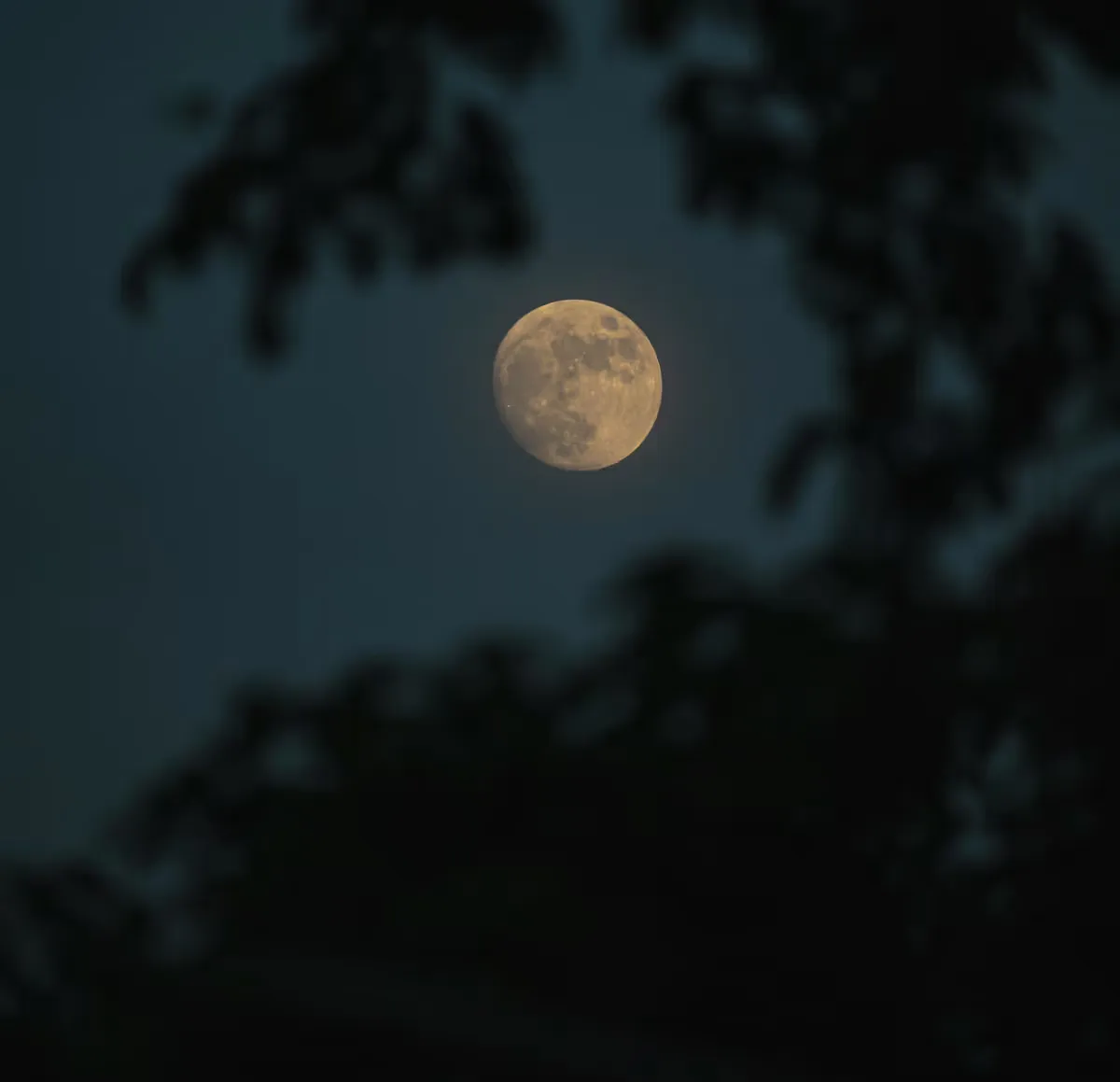
The moon has governed plant biology for longer than human civilisation has existed to observe it. This is what the science is beginning to confirm, and what the traditional harvest protocols have encoded for millennia  that when a botanical is collected is as consequential as where it grows and how it is formulated.
Every 29.5 days, the moon completes one full orbit of the earth. It has done this approximately 4.5 billion times. For most of that history, every living thing on this planet  every plant, every microorganism, every creature that photosynthesises or breathes or grows  has evolved inside that rhythm. The idea that the moon might influence plant biology is not mysticism searching for credibility. It is an observation so old and so geographically consistent that dismissing it requires more explanation than taking it seriously.
This is what the science is beginning to acknowledge, cautiously and with appropriate qualification, while traditional medicine systems from Tamil Nadu to the Andes have practised lunar herbalism with precision for millennia. The question is not whether the moon has any relationship to plant life. The question is the mechanism  and that is where the research is genuinely interesting.
The Gravitational Argument and Its Limits
The first instinct when explaining lunar influence on plants is to reach for gravity. The moon's gravitational pull drives the ocean tides, so perhaps it moves water within plants as well  drawing sap upward during the full moon, concentrating moisture in tissues, affecting the movement of nutrients through the vascular system.
The evidence here is real but more complex than simple tidal logic. Research examining water uptake by bean seeds found statistically significant quarterly lunar variation in absorption rates, with maximum rates occurring close to new and full moon phases. Studies on tree stem diameters found that they fluctuate in correlation with tidal forces  a phenomenon documented by Ernst Zurcher, a forestry engineer and wood scientist at ETH Zurich and the Bern University of Applied Sciences, whose decades of research on lunar rhythms in tree biology produced some of the most careful scientific work in this area. Zurcher's experiments found statistically significant correlations between the lunar phase at which trees were felled and measurable wood properties  moisture content, drying behaviour, durability  with trees felled during the waning moon showing systematically lower moisture content and differences in structural integrity.
However, Zurcher himself was careful to note that the simple tidal explanation is likely insufficient. The volume of water even in a large tree is small enough that a tidal gravitational force acting on it would be negligible by calculation. The phenomenon is real, but the mechanism is not simply water being pulled upward by gravity. Something more subtle is operating.
Current research points toward the gravitational tidal force affecting the transmission of electrical signals within plants  the bioelectric currents that govern growth, development, and defence responses. In addition to this, there is the influence of moonlight itself, and the less-studied but potentially significant effect of the moon's position on atmospheric and geomagnetic conditions, which in turn affect the electromagnetic environment in which plants exist. A 2025 review published in a plant science journal revisited the accumulated evidence and concluded that a lunar effect on plant biology is real, though the field still lacks a single unifying mechanistic explanation.
What is clear is that plants are not passive in their relationship to lunar cycles. They respond to them. The response is measurable. The full explanation is still being worked out.
Moonlight as a Biological Signal
Beyond gravity, the moon provides light  and while moonlight is roughly 400,000 times less intense than direct sunlight and insufficient for photosynthesis, it is not biologically inert.
Certain plant processes are extraordinarily sensitive to light at very low intensities. Photoperiodism  the mechanism by which plants track the length of day and night to determine when to flower, when to set seed, when to enter dormancy  operates at light levels far below what would be needed for energy capture. The full moon, which provides significantly more light than the other phases, represents a measurable perturbation in the plant's nocturnal light environment. Flowering timing, germination rates, and the production of secondary metabolites  the compounds that constitute a plant's medicinal value  are all processes that can be influenced by subtle shifts in light cues.
This is of particular relevance to aromatic and medicinal plants. Research has documented that the formation of fragrance molecules in certain flowers peaks around the full moon. Jasmine grandiflurom, for instance, produces its highest concentrations of the volatile compound epi-methyl jasmonate  responsible for much of its distinctive scent  when the moon is at its fullest. Roses produce their maximum fragrance in the pre-dawn hours, most intensely on full moon mornings. These are not romanticised observations. They are the reason why the perfumery traditions of southern India  and the traditional Ayurvedic guidance on harvesting aromatic botanicals  specify pre-dawn collection on or near the full moon as the optimal harvest window for fragrance and volatile oil content.
What the Classical Systems Understood
In Ayurveda, the moon  Chandra  is classified as the governing force of moisture, growth, cooling energy, and the nourishing quality called soma. Classical texts describe Chandra as the source of vitality for all plants, the provider of the nectar that sustains vegetative life. This is not metaphor dressed as pharmacology. It is a framework for understanding the relationship between lunar cycles and the qualities of medicinal plants  their moisture content, their cooling or heating energetics, the concentration of their active principles at different times of the lunar month.
The Charaka Samhita, one of the foundational texts of Ayurvedic medicine, addresses the timing of herb collection in relation to lunar phase, season, and time of day. The full moon  Purnima  is identified as the period of peak potency for lunar-governed herbs: those with cooling, nourishing, fluid-regulating, and rejuvenating properties. The new moon marks a period of withdrawal, of downward movement, appropriate for roots and underground structures. The waxing phase, as lunar light increases, is associated with upward movement  sap rising, above-ground growth intensifying, aerial parts concentrating their active compounds.
Siddha medicine, the older tradition of Tamil Nadu whose pharmacopoeia predates many of the classical Ayurvedic texts, encodes lunar timing into its harvesting and preparation protocols with equal specificity. Certain rasayanas  the longevity formulations that constitute Kaya Kalpa practice  are prepared exclusively on Purnima, the full moon night, or timed to coincide with specific nakshatras (lunar asterisms) that classical astro-botanical knowledge associates with particular therapeutic qualities. The preparation of certain Siddha herbal oils involves overnight lunar infusion  the medicine left exposed to moonlight for a full night  a practice that has a biochemical logic when understood in the context of moonlight's effect on volatile compound stability and the photochemical transformation of certain plant constituents.
This is not coincidental alignment between tradition and science. These systems observed, over thousands of years of careful practice, what the biochemistry of plants actually does across the lunar cycle. The language differs. The underlying observation converges.
Native Agricultural Traditions: The Global Consensus
The use of lunar calendars to govern planting, cultivation, and harvest is one of the most geographically universal practices in human agricultural history. It appears independently in cultures with no documented contact with each other  which is itself significant. When separate civilisations arrive at the same conclusion without communication, the probability that they are tracking a real phenomenon increases substantially.
The traditional farming communities of the Andes in South America planted according to the lunar calendar, with specific crops assigned to specific phases. The Maori of New Zealand used the lunar calendar  the Maramataka  as a comprehensive guide to planting, fishing, and harvesting, with particular lunar phases designated optimal for different plant families. Indigenous agricultural communities across North America, West Africa, and Southeast Asia maintained equivalent systems. In traditional European farming, the practice of cutting timber by the waning moon  to reduce moisture content, improve durability, and reduce susceptibility to rot and insect damage  persisted from ancient Roman agricultural writing through to the 20th century, and is the practice that Zurcher's modern research has found to have genuine scientific basis.
In India, the Panchanga  the traditional almanac that governs agricultural, medicinal, and ceremonial timing in Hindu and Dravidian tradition  integrates lunar phase, nakshatra, and seasonal position into a comprehensive calendar for when to plant, when to harvest, when to prepare medicines, and when to consume them. This is not superstition organised into calendar form. It is the accumulated observational science of an agricultural civilisation that had millennia to test its conclusions against results.
Maria Thun, a German researcher who beginning in 1956 spent decades conducting systematic biodynamic planting trials aligned with lunar phases, documented consistent patterns in crop yield and quality by phase  her work, while contested by some researchers and confirmed by others, remains one of the most sustained empirical investigations of lunar agriculture in the modern scientific record.
The Harvest Moment and Compound Concentration
From a formulation science perspective, the most practically significant lunar influence on medicinal plants concerns the timing of harvest and its relationship to the concentration of active compounds.
Plant secondary metabolites  the alkaloids, terpenoids, flavonoids, glycosides, and essential oils that constitute medicinal value  are not present in uniform concentrations throughout the plant's life cycle or even throughout the day. They accumulate, peak, and decline in response to environmental signals including light, temperature, moisture stress, and, the evidence increasingly suggests, lunar phase. Essential oil content in aromatic medicinal plants fluctuates with diurnal and lunar cycles simultaneously, which is why traditional harvest protocols specify not just the lunar phase but the exact hour of collection within that phase.
The logic of full moon harvest for above-ground, aerial medicinal plant parts  flowers, leaves, stems  is mechanistically coherent when understood through the lens of sap movement and compound distribution. During the full moon, increased gravitational and light stimulus appears to draw moisture and dissolved compounds upward through the vascular system into aerial tissues. A leaf harvested at the full moon, before dawn, from a plant grown in its native soil at altitude, represents a different biochemical snapshot from the same leaf harvested at the new moon, at midday, from a plant grown under compromised conditions. The difference is not symbolic. It is pharmacological.
This is why Siddha and Ayurvedic formulation protocols do not treat harvesting as logistically neutral. The timing of harvest is understood as a determinant of medicine quality, not merely of convenience. The same principle underlies the contemporary biodynamic harvesting calendar, and the growing body of research on chronobiology in plant science  the study of how biological processes in plants are temporally organised, and what disrupts or enhances that organisation.
The Moon and the Water Within
One dimension of lunar influence that cuts across multiple research directions is the relationship between the moon and water  not just in oceans, but in the water that constitutes the primary medium of plant biochemistry.
Approximately 80–95% of a living plant's mass is water. Every metabolic process that produces or transforms a medicinal compound occurs in an aqueous medium. If lunar forces influence the behaviour of water at any level  its absorption rates, its movement through plant tissues, the organisation of its molecular structure under different electromagnetic and gravitational conditions  the downstream effects on plant biochemistry could be significant even from subtle initial perturbations.
Research on water absorption in seeds across lunar phases shows statistically significant variation that follows a circaseptan rhythm  a cycle of approximately 7.4 days that corresponds to the quarter phases of the lunar cycle. This rhythm appears to be endogenous to the plant  operating as an internal biological clock that has been entrained to lunar timing over evolutionary history, not simply responding in real time to gravitational forces. The plant carries the lunar rhythm within it, the way the human body carries circadian rhythms even in the absence of light cues. The moon's influence may be less about moment-to-moment pulling and more about the deep evolutionary encoding of lunar cycles into plant biology itself.
The Practice at the House of Sampriti
The decision to harvest according to lunar phase is not a marketing position. It is a formulation principle  one that traditional medicine made explicitly, and that contemporary plant science provides increasing support for, even as the full mechanistic picture remains incomplete.
At Sampriti, we work within the realities of botanical supply. Our sourcing depends on cultivators and suppliers across diverse geographies, and we cannot guarantee that every harvest is timed to the lunar calendar. What we can do  and what we actively pursue  is to prioritise suppliers who practice traditional harvest timing where it is possible, to specify optimal harvest windows in our sourcing briefs, and to select raw material that reflects the care and timing of its collection in its compound profile and sensory quality.
The moon does not make a poorly grown plant excellent. But it may make an excellently grown plant more fully itself  more concentrated in the compounds that constitute its therapeutic identity, harvested at the moment when those compounds are most bioavailable and most intact.
That is what the traditional systems understood. It is what the science is beginning, with appropriate care, to confirm.
Note: The scientific evidence for lunar influence on plant biology is real but still developing, with significant variation across studies and plant species. This article reflects the current state of research alongside documented traditional practice, and does not claim that all aspects of lunar herbalism are yet fully explained by available science.