Botanical Profile
The Crimson Catalyst: Hibiscus in Practice
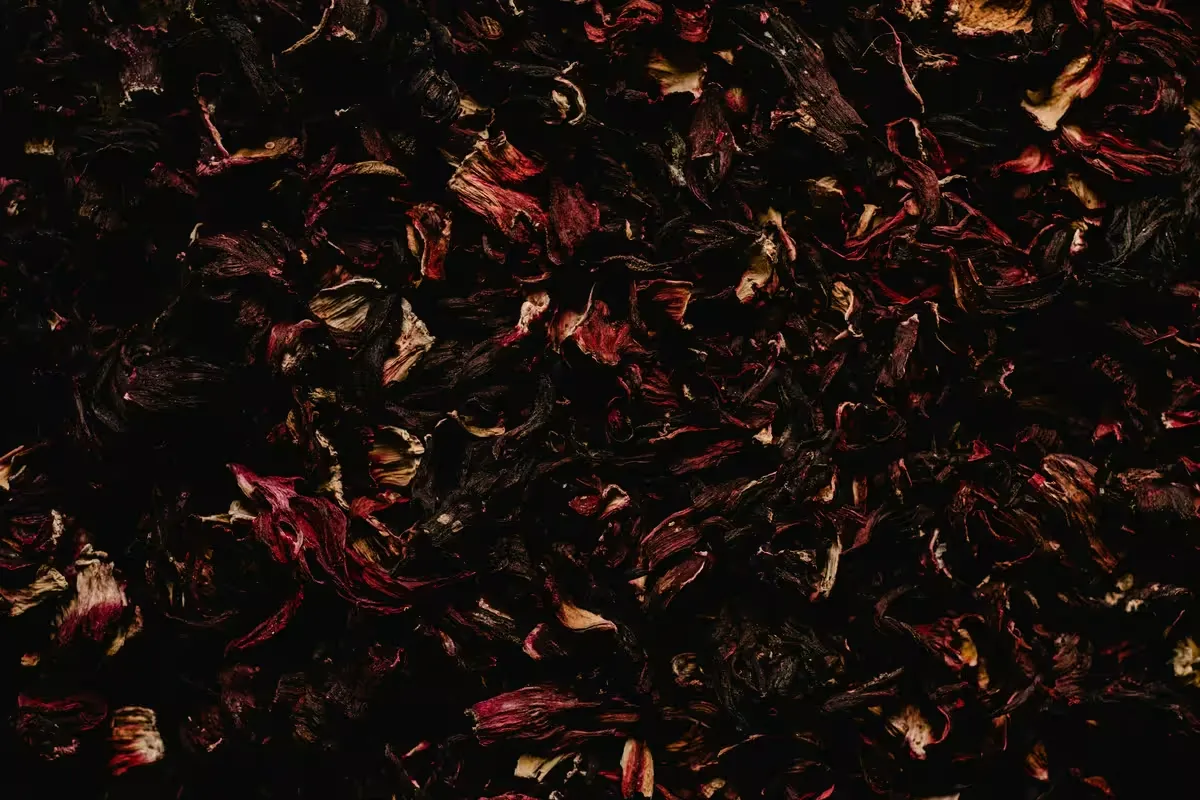
Hibiscus (Japa) is a high-functioning botanical characterized by its dense concentration of anthocyanins and organic acids. Discover how these compounds provide remarkable resilience.
Walk through any garden in South India at dawn and you will find it  the deep red trumpet of Hibiscus rosa-sinensis opening to the morning light, freshly plucked and laid at the threshold of a household shrine, tucked into a woman's oil-darkened braid, pressed between the palms of a priest preparing for ritual. It is so woven into the fabric of Indian daily life  devotional, cosmetic, culinary, medicinal  that it risks being taken for granted. That would be a mistake.
Hibiscus rosa-sinensis is one of the most biochemically complex flowering plants in the Malvaceae family, and one of the most consistently documented across independent traditional medicine systems spanning four continents. What those systems identified empirically over centuries  its relationship to blood, heat, hair, hormones, and the metabolic terrain  is now being mapped at the molecular level by contemporary pharmacology. The convergence is not coincidental. It is the hallmark of a plant with genuine, multi-systemic physiological activity.
A Flower That Travelled Far
The precise origins of Hibiscus rosa-sinensis are still debated among botanists. The name  rosa-sinensis, "rose of China"  points to East Asia, and the plant is widely believed to be native to South China or the broader tropical Asian region. But its cultivation history in the Indian subcontinent is so ancient and so deep-rooted that its arrival here, if it arrived at all, predates recorded history. By the time classical Ayurvedic texts were formalising their pharmacopoeias, H. rosa-sinensis  known as Japa, Gudha, Japakusum, or Rudrapushpa  was already established as both medicinal and devotional.
From Asia it spread across the tropical world. It is cultivated today across South and Southeast Asia, Central and South America, Africa, the Pacific, and the Caribbean  and has been integrated, with remarkable consistency, into the traditional medicine systems of nearly every culture that has grown it. Its ability to thrive in diverse tropical soils while retaining its medicinal profile speaks to a botanical resilience that mirrors its therapeutic character.
The Compound Architecture
The flower of H. rosa-sinensis is a dense and layered pharmacological structure. Its primary bioactive load resides in the petals  particularly the red-flowered varieties, which carry a significantly richer anthocyanin profile than yellow or white cultivars.
The dominant anthocyanin is cyanidin-3-sophoroside, accompanied by cyanidin-3,5-diglucoside and a suite of related glycoside forms. These are the pigment molecules responsible for the flower's characteristic crimson depth, and they are also potent scavengers of reactive oxygen and nitrogen species  the oxidative and inflammatory mediators that drive cellular ageing, vascular damage, and metabolic dysfunction.
The flavonoid fraction is equally significant. The petals contain rutin (identified as the major flavonoid by quantitative analysis), quercetin, kaempferol, and myricetin  a quartet of compounds with well-characterised anti-inflammatory, antioxidant, and enzyme-modulating properties. Molecular docking studies have demonstrated that myricetin and rutin show strong binding affinities with alpha-glucosidase and superoxide dismutase (SOD), two enzymes central to glucose metabolism and oxidative stress management respectively.
Beyond the flavonoids and anthocyanins, the leaves carry tannins, saponins, terpenoids, glycosides, and mucilage  the latter being the thick, gel-like polysaccharide that gives hibiscus its distinctive slip and is largely responsible for its topical applications in hair and skin. The stem and roots contain beta-sitosterol, taraxeryl acetate, and cyclopropanoid fatty acids including malvalic and sterculic acids.
The whole plant is a pharmacy. The flower is its most studied and most versatile structure.
Internal Consumption: What the Research Shows
The internal therapeutic applications of H. rosa-sinensis documented across traditional medicine systems cluster around several physiological domains, each now supported by varying degrees of modern scientific evidence.
Metabolic and glycaemic regulation represents perhaps the most compelling contemporary research direction. Multiple studies have demonstrated that flower extracts of H. rosa-sinensis reduce blood glucose levels in both acute and sub-acute models, with ethanol extracts at doses of 250–500 mg/kg showing significant hypoglycaemic effects. The mechanism involves inhibition of postprandial glucose absorption in the intestine, interference with carbohydrate-digesting enzymes, and modulation of insulin sensitivity. The flavonoid rutin's strong alpha-glucosidase binding affinity  identified in molecular docking studies  provides a specific mechanistic explanation for what traditional medicine systems had observed empirically for generations.
Cardiovascular and lipid effects are documented through hibiscus's influence on PPAR-γ, SREBP-1c, acetyl-CoA carboxylase, and fatty acid synthase  a cascade of regulatory proteins governing fat metabolism and cardiac function. Studies indicate reductions in triglycerides and LDL cholesterol, alongside protective effects on cardiac tissue mediated by the plant's antioxidant and anti-inflammatory compounds. These cardioprotective properties were identified in Ayurvedic classical texts, where H. rosa-sinensis is classified as Hridya  a cardiac tonic  and continue to be substantiated by contemporary biochemical research.
Anti-inflammatory activity has been demonstrated across multiple in vitro and animal studies, with hibiscus extracts significantly reducing inflammatory markers including IL-6, TNF-α, and cyclooxygenase levels. A study examining ethanolic extracts of H. rosa-sinensis flowers and leaves showed significant alleviation of inflammatory response in carrageenan-induced oedema models. Tea prepared from H. rosa-sinensis has been shown to carry inflammation-reducing properties with implications for joint health and cartilage integrity.
Hepato-renal protection represents another documented domain. The plant's antioxidant compounds  particularly quercetin and the anthocyanins  provide protective activity against oxidative damage in liver and kidney tissue, classifying H. rosa-sinensis among the botanicals with documented hepatoprotective and renoprotective properties.
Haematopoietic and blood-related effects are documented in classical Ayurvedic texts under the categories Shonita Sthapana (blood stasis, arresting excessive bleeding) and Rakta Pitta (management of Pitta disorders manifesting through the blood). The flower's astringent quality  its Kashaya rasa  is understood in classical medicine to relate to its styptic and haemostatic properties. Modern research on the flower's anti-haemolytic activity  its capacity to reduce lipid peroxidation and haemolysis in red blood cells  provides a mechanism for these classical observations.
Menstrual health is an area of classical therapeutic significance that warrants careful note. H. rosa-sinensis has documented emmenagogue properties  it stimulates menstrual flow  and is employed in Ayurvedic and Siddha formulations for amenorrhoea and dysmenorrhoea. The Vrinda Madhava and Bhava Parkasha Chikitsa Sthana both contain specific formulations using Gudhal flowers to regulate menstrual function. This action, however, also underlies the plant's well-documented antifertility effects in classical texts and modern animal studies. H. rosa-sinensis is classified in Ayurveda as Grabha Nirodhaka  contraceptive  and its internal use is traditionally contraindicated for women seeking to conceive. This is a boundary that both traditional medicine and contemporary research take seriously, and responsible use of this botanical requires that it be understood.
What the World's Medicine Systems Knew
Ayurveda classifies H. rosa-sinensis with the qualities of Tikta (bitter) and Kashaya (astringent) taste, and Sheeta virya  a cooling energetic. It is designated Keshya (beneficial to hair), Hridya (cardiac tonic), Shonita Sthapana (haemostatic), Sangrahi (bowel-binding, useful in diarrhoea), and Mutra Sangrahniya (supporting urinary function). The classical text Vrinda Madhava records a specific formulation using hibiscus flowers, iron slag (Lohamala), and Amalaki fruit applied to the scalp for the treatment of Palitya  premature greying. The Siddha Bhaishjya Mannimala records internal preparations using hibiscus for genitourinary conditions.
Traditional Chinese Medicine employs H. rosa-sinensis to clear heat and promote blood circulation  a characterisation that maps precisely onto its modern anti-inflammatory and vasodilatory profile. The cooling classification appears independently in TCM and Ayurveda, both systems identifying the same core energetic quality through entirely different theoretical frameworks.
Brazilian traditional medicine uses H. rosa-sinensis widely for the treatment of diabetes  a use that predates contemporary pharmacology by generations and has since been investigated in formal clinical studies.
Southeast Asian traditional medicine systems across Thailand, Indonesia, and the Philippines employ the plant for fever, respiratory conditions, and topical wound healing  with the mucilaginous leaf pulp applied as an emollient to burns and abscesses, a practice documented in contemporary Tamil Nadu rural clinics as well.
Hawaiian and Pacific traditional medicine have incorporated the flower  now the state flower of Hawaii  into ritual and medicinal contexts, with the red variety specifically valued for its therapeutic properties.
The pattern across these systems is consistent: independent traditions, separated by geography and epistemology, arrived at the same understanding of this plant's cooling, anti-inflammatory, blood-supporting, and hair-nourishing properties. That kind of ethnobotanical convergence is itself a category of evidence.
External Application: The Keshya Tradition
H. rosa-sinensis is, in the classical Indian pharmacopoeia, the preeminent keshya herb  the botanical with the greatest traditional claim to hair health, scalp nourishment, and the maintenance of hair colour and texture. This is not a folk belief that has been left unexamined. The mucilaginous compounds in the flower and leaf provide measurable emollient and conditioning activity. The flavonoids and anthocyanins deliver antioxidant protection to the scalp's cellular environment. The plant's cooling, Pitta-reducing energetic specifically addresses the excess internal heat that classical medicine identifies as the root cause of premature hair loss and greying.
The traditional preparation  flowers and leaves infused into sesame or coconut oil, applied to the scalp and left overnight  is documented in regional texts including Vaidya Vijnana (circa 1750 CE), which records a hibiscus-based oil used for scalp inflammation and hair loss, and in Tamil Nadu oral traditions around Kusuma Thailam, a hibiscus-sesame preparation used in temple contexts for ritual head-anointing.
The Vrinda Madhava's formulation for premature greying  hibiscus flowers combined with iron slag and Amalaki  reflects an understanding of the plant's capacity to support melanin-related processes in the hair follicle, a direction that contemporary trichological research is beginning to investigate formally.
For the skin, H. rosa-sinensis offers its mucilage as a natural emollient and humectant, its organic acids as mild exfoliating agents, and its anthocyanins as topical antioxidants. The Roopan (healing) property attributed to it in Ayurvedic texts  its capacity to promote clear, luminous skin  aligns with its documented free-radical scavenging activity at the skin surface.
Ceremony, Adornment, and the Living Ritual
In the Hindu devotional calendar, H. rosa-sinensis holds two primary associations. The red flower is offered to Goddess Kali  the force of dissolution, transformation, and raw power  and to Lord Ganesha, the remover of obstacles whose energy in classical anatomy is said to reside in the lower chakras governing the kidneys and reproductive organs. The association between hibiscus and these two deities is not arbitrary: the flower's physiological affinities for blood, the reproductive system, and the lower body's elimination organs are precisely the domains each deity is understood to govern.
In Tamil Nadu specifically, the hibiscus is inseparable from the daily lives of women. Freshly plucked red flowers  always the red variety, always fresh  are woven into braided hair each morning as a practice that is simultaneously devotional, aesthetic, and medicinal. The oils in the freshly opened petal condition the hair through direct contact. The flower's brief, brilliant life  fully open in the morning, spent by evening  mirrors something in the rhythm of the daily ritual it accompanies.
The flower decorates temple thresholds at festival time, is strung into garlands for household shrines, and appears in the jewellery of brides and dancers. It is present at every significant threshold moment in traditional Tamil life  birth, coming of age, marriage, worship. This is not decoration. It is the language of a culture that understands plants as participants in the events of human life.
A Note on the Red Variety
Not all H. rosa-sinensis is equal in therapeutic terms. The red-petalled varieties carry a measurably higher concentration of anthocyanins and flavonols than the yellow, orange, or white cultivars. Research confirms that red varieties have a greater number of anthocyanin bands and higher total flavonoid content. Ayurvedic tradition arrived at the same conclusion without chromatography: classical texts specify the red flower  Raktajapa  for medicinal and ceremonial use, while acknowledging that other colours exist. The pigment is the medicine. Depth of colour is a proxy for compound density. This is one of those cases where traditional knowledge and analytical chemistry reach identical conclusions from opposite directions.
The Scope of Practice
Hibiscus rosa-sinensis is a plant that operates across the full spectrum of traditional botanical practice  internal medicine, external therapeutics, culinary use, ceremonial life, and daily adornment. It is simultaneously the physician's herb and the woman's morning ritual. It is offered to the goddess and applied to the scalp. It sits in the pharmacopoeia and in the garden.
What modern science is now confirming, compound by compound, is that the breadth of traditional use was not superstition or coincidence. The anthocyanins that colour the goddess's offering are the same molecules that modulate inflammatory cascades and protect vascular endothelium. The mucilage that softens and conditions hair is the same structure that soothes gastrointestinal irritation when consumed. The cooling quality that Ayurveda and Traditional Chinese Medicine independently identified as the plant's governing energetic is now understood, mechanistically, as anti-inflammatory and vasodilatory activity at the cellular level.
The flower does not separate its roles. It brings everything it is to every context it enters. That integration  across the body, across culture, across the registers of science and tradition  is what makes Hibiscus rosa-sinensis one of the most genuinely instructive botanicals a house of formulation science could choose to study.
Practitioner's note: Due to its documented emmenagogue and antifertility properties, internal use of H. rosa-sinensis is traditionally contraindicated during pregnancy and for women actively seeking to conceive. Always consult a qualified practitioner before beginning any internal botanical protocol.