Ritual Science
The Art of Infusion
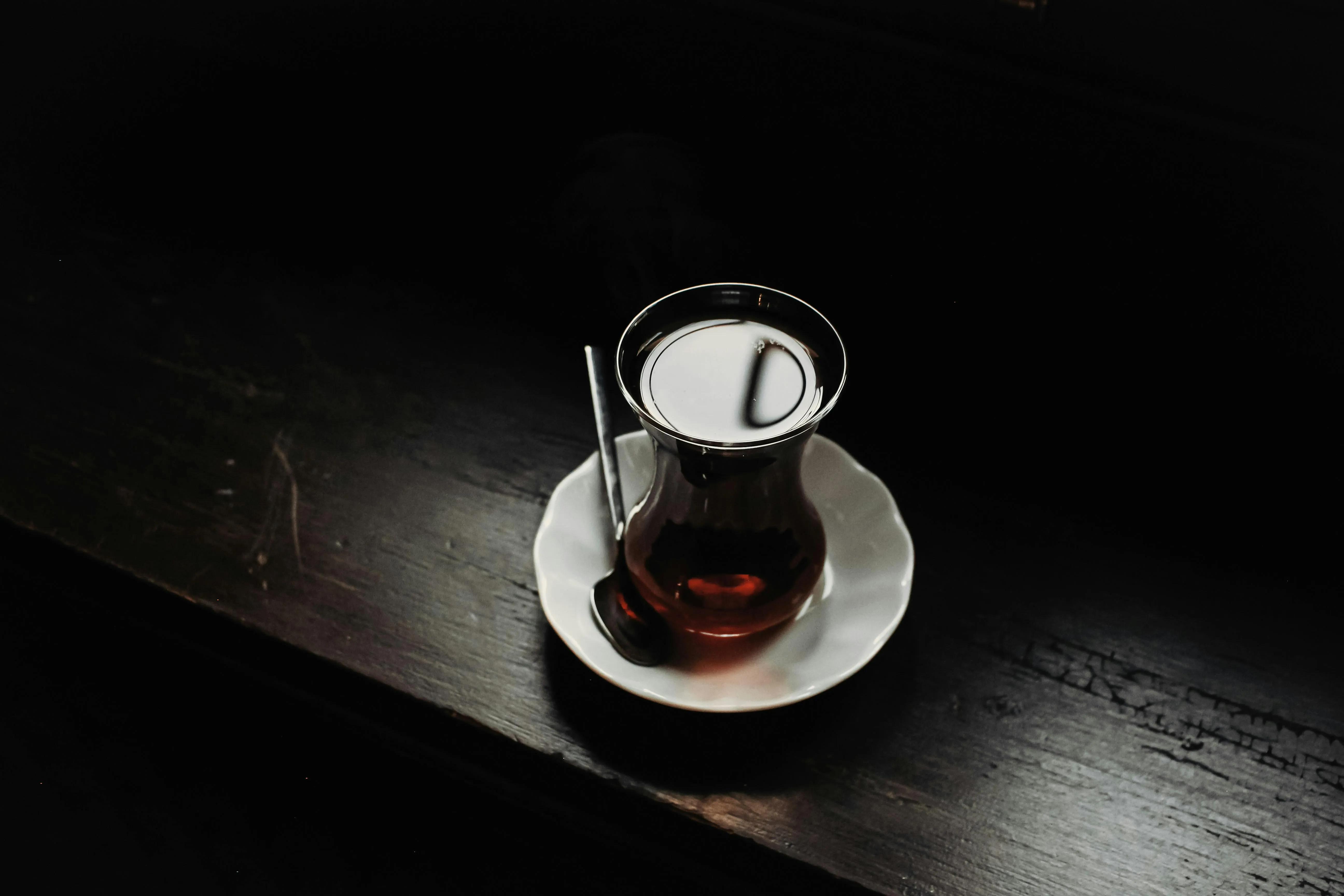
Infusion is extraction  a precise negotiation between water, heat, time, and plant chemistry. What comes through in the cup depends entirely on how carefully that negotiation is conducted.
Infusion is one of the oldest and most precise ways to meet a plant. Water, heat, and time draw out aromatics, colour, bitterness, sweetness, and texture in different measures  and what comes through depends not just on which plant you are working with, but on how carefully you read it.
The best cup is not always the strongest cup. It is the one that preserves the plant's character.
This sounds simple. It is not. Infusion is a chemistry problem with a sensory answer, and understanding what is actually happening in the vessel  what compounds are being released, at what rate, under what conditions, and what is lost when you get it wrong  turns a routine preparation into something closer to practice.
The Oldest Technology
The history of botanical infusion is approximately as old as the history of fire. The first infusions were almost certainly accidental  plant material falling into heated water, the resulting liquid tasted and found to do something  but the practice codified rapidly across every civilisation that discovered it, because water extraction is the most accessible way to unlock a plant's interior chemistry without sophisticated equipment.
Chinese medical tradition traces herbal infusion to around 2700 BCE, with the legendary Emperor Shen Nong credited with the first deliberate botanical brew. What began as a single discovery became the foundational preparation method of Traditional Chinese Medicine, which developed intricate multi-herb formulas requiring precise ratios, sequences, and temperatures  the aesthetics of a ritual embedded in the logic of a pharmacopoeia.
Egyptian papyrus texts from around 1550 BCE document herbal infusions for medicinal use, with preparations described for specific conditions and specific plant combinations. The Ebers Papyrus  one of the oldest surviving medical texts  catalogues dozens of plant preparations, many of them water-based, used across a therapeutic range from fever reduction to digestive complaints.
In India, Ayurveda formalised infusion  kwatha and phanta  as distinct preparation categories with specific temperature and timing protocols for different plant materials. Siddha medicine in Tamil Nadu developed its own parallel system of extraction and preparation, with classical texts specifying not just which plant to use but precisely how to prepare it: which part, which season, which vessel, which water, which heat, and for how long. These are not ceremonial distinctions. They are pharmacological ones.
Across the Andes, Indigenous communities steeped coca, muña, and dozens of altitude-specific medicinal plants in hot water for altitude sickness and pain management  preparations that predate European contact by centuries and that modern pharmacology has since confirmed as bioactively sound. In Morocco, the preparation of mint tea evolved into one of the most precisely choreographed hospitality rituals on earth  three pours, each at a different height, each changing the aeration and the flavour profile of the same liquid. Infusion as theatre, as medicine, as greeting.
Every culture that developed agriculture developed botanical infusion. That convergence is not coincidence. It reflects a fundamental fact about plants and water: they have a relationship, and heat is the catalyst that makes it visible.
The Chemistry of Extraction
What happens when you steep a plant in hot water is a controlled dissolution. The hot water acts as a polar solvent  its molecular charge makes it specifically good at attracting and dissolving other polar, water-soluble compounds. As the plant material is immersed, cell walls begin to soften and become permeable, allowing water to penetrate the cellular matrix and carry soluble constituents out into the liquid.
What comes out first, and fastest, are the water-soluble, structurally simple compounds: aromatic volatiles, simple sugars, mucilage, colour pigments including anthocyanins, and the lighter phenolic compounds. What takes longer  and what requires more sustained heat or mechanical disruption  are the larger, more complex molecules: heavier polyphenols, certain alkaloids, and structural compounds locked inside dense lignified tissue.
This is why infusion and decoction are distinct techniques, not interchangeable ones. Infusion  steeping in hot but not boiling water, for a controlled duration  is the appropriate method for plant materials with thin cell walls and significant volatile content: flowers, leaves, aromatic herbs. Decoction  sustained simmering over time  is the appropriate method for roots, barks, seeds, and woody materials whose active compounds are bound inside dense, lignified structures that gentler heat cannot adequately penetrate.
Temperature is the most consequential variable. Research confirms that flavonoids and phenolic acids extract most efficiently at moderate temperatures between 40 and 60 degrees Celsius, but that temperatures above 80 degrees begin to cause degradation of these compounds  the very molecules you are trying to extract. Chamomile flavonoids, for instance, are significantly sensitive to both temperature and pH. Volatile aromatic compounds  the terpenoids and essential oil constituents that give a flower its fragrance and much of its therapeutic character  evaporate rapidly at high temperatures and are lost with the steam if the vessel is left uncovered.
This is the core tension in infusion science: hotter water extracts more efficiently, but it also destroys more. The art is in finding the temperature at which extraction is maximised without degradation exceeding acceptable limits  and that threshold is different for every plant, every part, and every target compound.
Water quality matters as well. Research has demonstrated that highly mineralised water significantly reduces polyphenol and flavonoid extraction compared to medium-mineralisation or deionised water  in some cases reducing antioxidant activity in the resulting infusion by up to 70 or 90 percent. The mineral content of water competes with the polyphenols' ability to dissolve. Soft water, or water with moderate mineral content, produces a biochemically richer infusion from the same plant material as hard, mineral-heavy water. This is part of why traditional infusion practices specify water source  spring water, rainwater, mountain water  with a care that might seem like ritual but is in fact chemistry.
What Roots Need That Flowers Do Not
The distinction between delicate and robust plant materials runs through every traditional botanical system, and the chemistry explains why.
A flower is a structure built for short-term function  to attract pollinators, to open and close quickly, to release scent and pollen. Its cell walls are thin, its compounds are close to the surface and often volatile, its architecture is not designed for resistance. When you steep a flower in water that is too hot, or for too long, you lose its most characteristic compounds first  the volatiles that give it its fragrance, the lighter flavonoids that give it its colour, the delicate glycosides that carry its specific therapeutic character. A flower steeped correctly gives you its full self. A flower over-steeped gives you a flat, tannic extract of its structural remains.
A root is the opposite. It is built for long-term function  to store nutrients, to anchor the plant, to survive winter, to resist soil organisms. Its cell walls are dense and lignified, its active compounds are locked deep inside its cellular architecture, and getting them out requires real sustained energy. Roots and barks need longer times, higher temperatures, and often physical disruption  coarse grinding, chopping, or extended simmering  to give up their medicine. Research confirms that harder plant materials like roots and barks reach maximum compound extraction between four and six hours at 60 to 70 degrees, under conditions that would completely destroy a flower in under a minute.
This is the foundational knowledge that classical Ayurveda and Siddha medicine encode into their preparation protocols. The Sanskrit term phanta refers specifically to a cold or hot infusion of delicate plant parts  flowers, leaves  prepared without boiling, covered to retain volatile compounds. Kwatha refers to a decoction of denser materials, reduced by sustained heat. These are not stylistic distinctions. They reflect an empirically derived understanding of plant architecture and compound behaviour that modern extraction science has confirmed.
The Variable of Time
Beyond temperature, time is the second critical variable  and the one most easily mishandled.
Under-steeping produces an incomplete extraction: the aromatic surface compounds come through but the deeper, structurally significant molecules remain trapped in plant tissue. The cup is pleasant but pharmacologically shallow. Over-steeping produces a different problem: as extraction continues past the optimal window, the more delicate compounds begin to oxidise and degrade, tannins concentrate and dominate the flavour, and the astringency that characterises an over-steeped preparation reflects a chemical reality  the plant's defensive compounds, which are typically extracted last, are now overrepresented in the cup.
The window between under-extraction and over-extraction is not fixed. It varies by plant material, by particle size, by temperature, and by the specific compounds being targeted. A loose-leaf aromatic flower might have an optimal window of three to five minutes. A root decoction might need twenty to forty minutes of sustained simmer. Finding that window is a practice  something developed through attention to colour, aroma, and taste over time  and it is the same practice that every serious botanical tradition in the world has described, each in its own vocabulary.
Taste is information. The bitterness that builds in a cup as it over-steeps is not a subjective complaint. It is the plant communicating that its chemistry has shifted. Traditional Ayurvedic medicine explicitly emphasises tasting herbs as part of their administration  the rasa, or taste, of a preparation is understood as a signal to the body about the nature of what is entering it, and a proxy for the quality of the extraction. Siddha practice encodes the same understanding. The palate is an instrument of quality assessment, not just an organ of pleasure.
Covering the Cup
One detail that separates a careful infusion from a careless one: whether the vessel is covered during steeping.
Volatile aromatic compounds  the essential oil constituents that are responsible for a plant's characteristic scent and a significant portion of its therapeutic activity in aromatic botanicals  evaporate readily at extraction temperatures. When a cup is steeped uncovered, these compounds leave with the steam. They rise visibly as fragrant vapour, which is beautiful and also a direct measure of what is being lost. A flower infusion prepared in an uncovered vessel loses its most aromatics-rich fraction to the air above the cup.
Covering the vessel retains the volatile fraction, allowing it to condense and return to the liquid. This single adjustment meaningfully changes the biochemical composition of the resulting infusion  not in ways that are yet routinely measured in commercial infusion science, but in ways that traditional practitioners have understood for a long time. Classical preparation texts across Ayurveda, Chinese medicine, and traditional European herbalism specify covering the vessel. This is not ceremony. It is extraction technique.
Ratio and Measure
The relationship between plant material and water volume is the third dimension of infusion control, and the one most often treated as approximate when it should not be.
Increasing the ratio of plant to water increases compound concentration in the cup, but only up to the point where the solvent is saturated  after which additional plant material contributes little to extraction while increasing the risk of over-tannic, unbalanced preparations. Decreasing the ratio produces an under-concentrated infusion where target compound levels may fall below therapeutic relevance.
Traditional medicine systems specified ratios with precision  Siddha and Ayurvedic preparations list plant-to-water ratios and reduction volumes explicitly, as does the Chinese pharmacopoeial tradition. These ratios are not arbitrary. They represent empirically developed optimal extraction parameters for specific compounds from specific plant materials. The informality with which modern infusion culture treats these ratios  a handful of this, a pinch of that  reflects a loss of the underlying knowledge that made the original ratios meaningful.
Dosage begins at preparation. A carelessly made infusion with a correct dose specification is not a dosed preparation. It is a variable one.
Infusion as Attention
What makes the practice of infusion worth returning to  beyond its biochemical logic, beyond its historical depth  is what it asks of the person preparing it.
It asks for measurement. It asks for temperature awareness. It asks for timing. It asks you to cover the cup, to watch the colour deepen, to smell what the steam carries, to taste what has changed at two minutes and again at five. It asks you to be present with what you are doing in a way that most modern preparation methods do not.
A careful infusion practice turns preparation into attention: measure, steep, pause, and taste what has changed.
That attentiveness is not decorative. It is functional. The person who has developed it over time makes better infusions  extracts more of what should be there, loses less of what should be preserved, arrives at a cup that more fully represents the plant's character. And it is that full representation of the plant  the complete biochemical picture, extracted with appropriate care  that is the purpose of the practice.
The plant does not change. What changes is the quality of listening.
At Sampriti
Our infusions are prepared from botanicals sourced for potency and provenance  plants harvested at developmental peak, from their strongest geographies, with compound profiles verified through sensory and, where possible, analytical assessment.
Each Sampriti infusion carries preparation guidance specific to its botanical content. These are not generic steep-for-three-to-five-minutes instructions. They reflect the specific architecture of the plants involved  their delicacy or density, their volatile or stable compound profiles, the temperature range in which their target constituents are most fully expressed without degradation.
The guidance is the beginning of the practice. What develops from there belongs to the person preparing it.